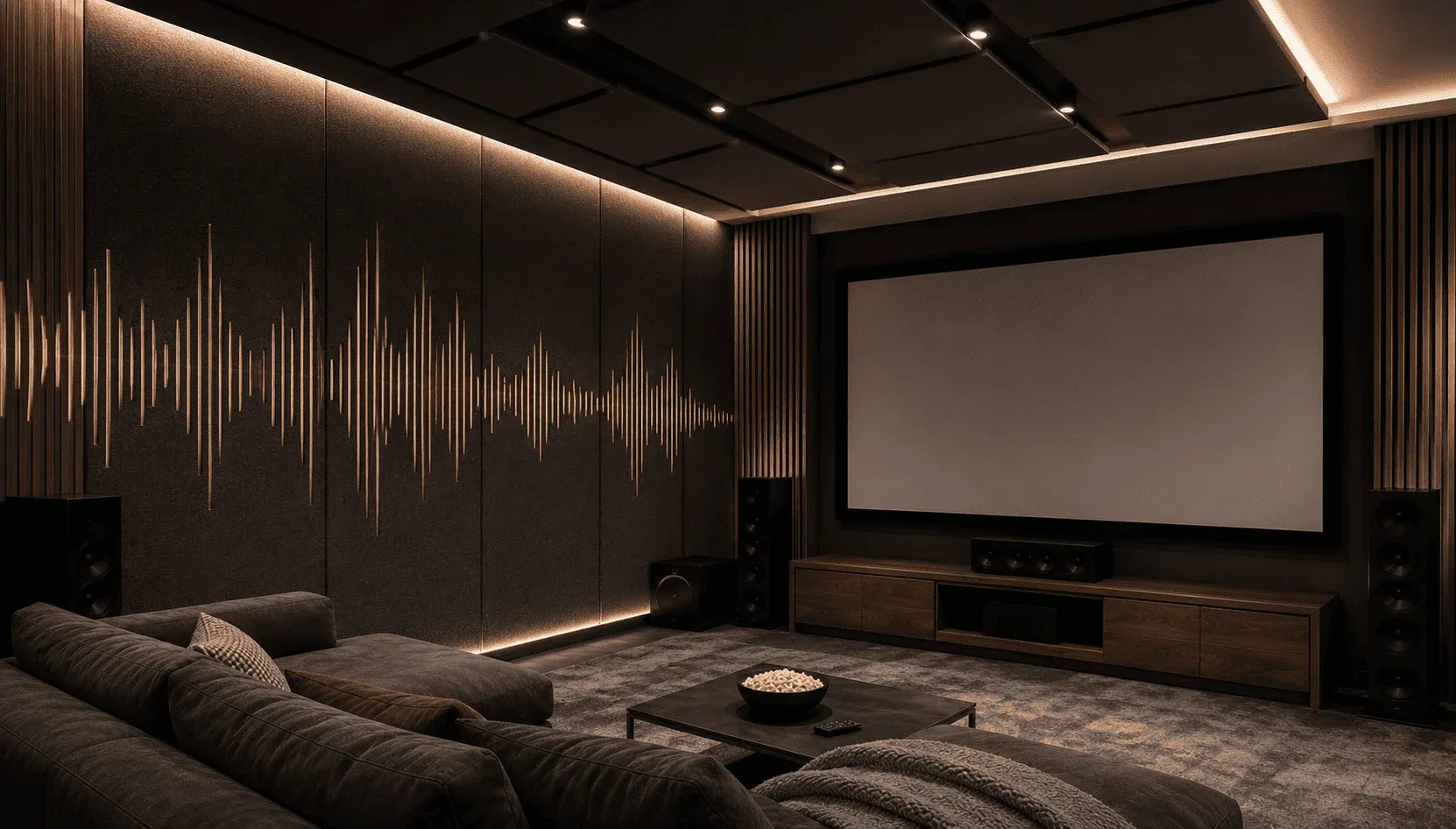
Where acoustics become invisible
Acoustic finishes: decorative solutions that reduce reverberation and optimise sound in home cinemas, living rooms, bedrooms and commercial spaces.
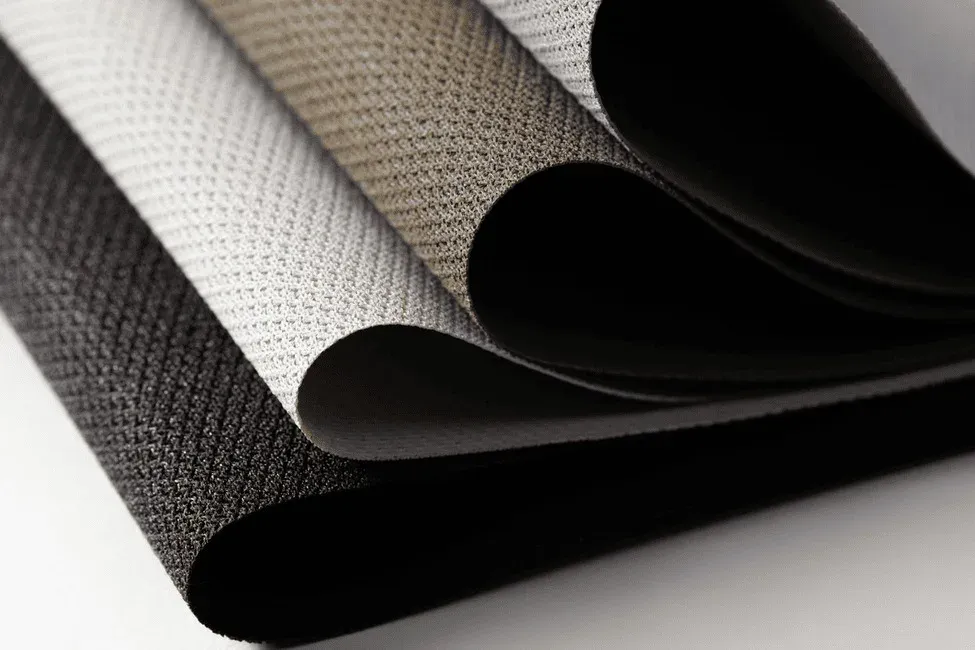
Specialists in acoustic finishes for homes and businesses.
If the echo in your living room makes it hard to enjoy a clear conversation or your favourite show, the issue is reverberation from rigid materials like plasterboard. Our upholstery system, built around high-end sound-absorbing textiles, “catches” the sound and turns your home into a quiet refuge. The result is impeccable acoustic comfort with a warm, modern aesthetic — without the chaos of a renovation: install is fast, clean and bespoke. And thanks to our large-format fabrics, we deliver seamless, uninterrupted finishes with no joints or divisions.
Most in-demand decorative solutions.
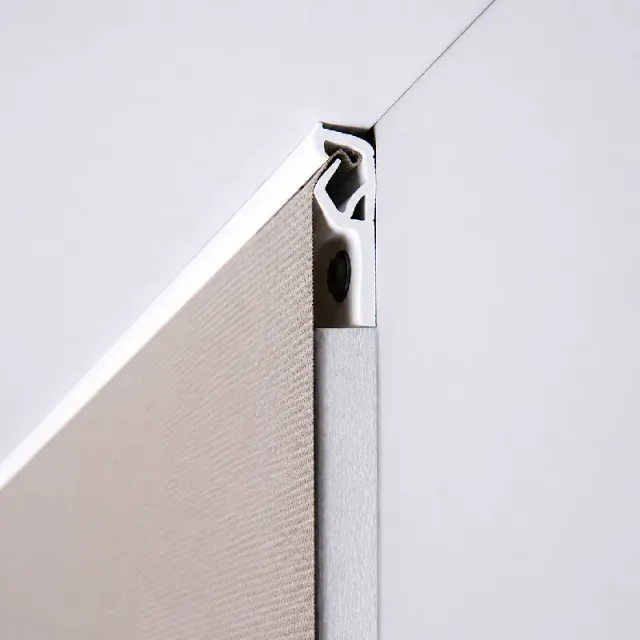
Stretched acoustic fabric — Clipso
Up to 5 metres wide.
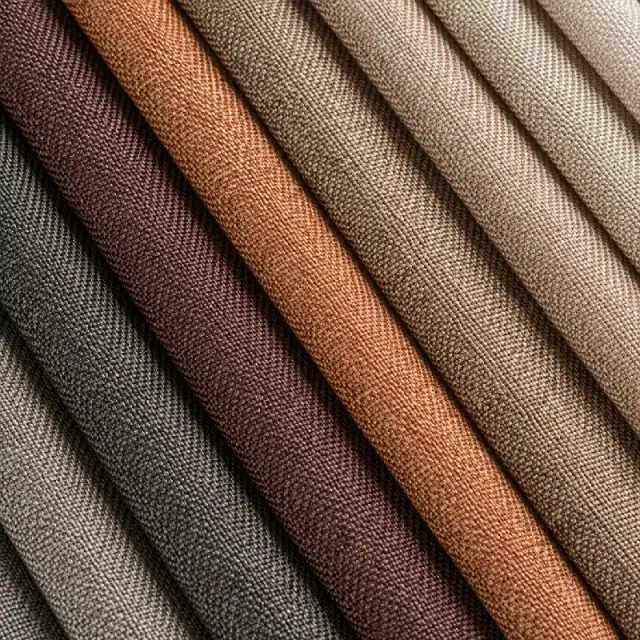
Acoustic fabric — natural linen finish
Up to Class A absorption.
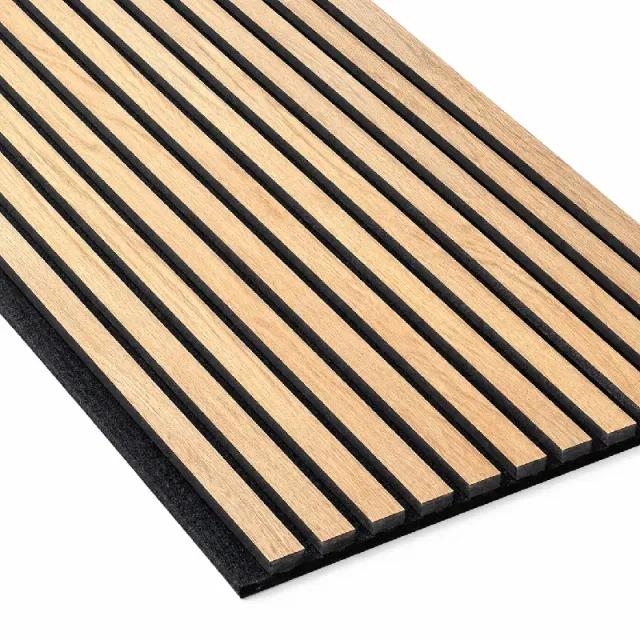
Wood-slat and felt panel
Sound absorption and dispersion.
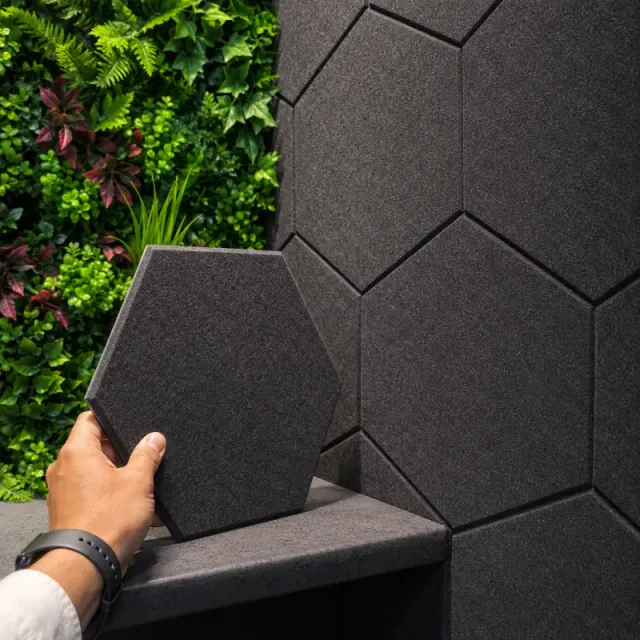
Self-adhesive polyester panel
Modern look.
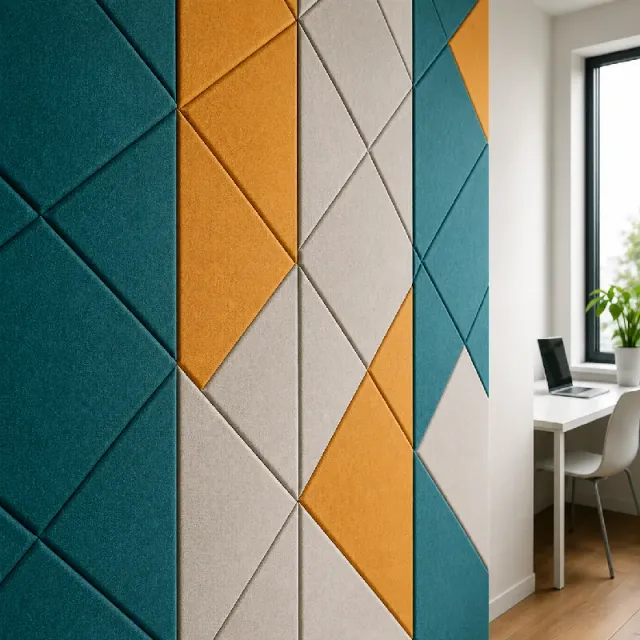
PET acoustic panel
Adapts to any design.
Treatment or sound-proofing — which do I need?
Acoustic treatment: corrects the room's internal acoustics and eliminates echo. Soundproofing: blocks sound and prevents noise from entering or leaving the room. Most residential spaces are completely transformed by good acoustic treatment; private cinemas and multimedia rooms usually need an integrated approach. We assess your space individually and advise you with full transparency.
Is there any fabric or finish that can't be matched?
Yes — our SONORTEC microperforated acoustic fabric. Paired with a 10 mm acoustic absorber, it eliminates echo exceptionally well. It stands out for its total sound transparency and, above all, for giving any space a modern, elegant look.
What is the ideal reverberation time in a cinema?
The ideal reverberation time in a cinema must be very short (typically between 0.2 and 0.4 seconds). If sound bounces excessively off reflective walls or high ceilings, it creates a harsh echo that makes dialogue unintelligible and ruins the film's original mix.
What kinds of materials are used?
Mid and high frequencies are controlled with profiled foams and fabric-wrapped fibreglass or rockwool panels. Low and bass frequencies, on the other hand, require bass traps or membrane resonators. A thick carpet on the floor also helps damp lower reflections.
How does the screen affect the sound?
Commercial cinemas and high-end residential rooms use acoustically transparent microperforated screens. This lets the front and centre speakers sit directly behind the screen, so dialogue and voice effects appear to come straight from the actors themselves.
See our videos
Acoustic fabrics and sound-absorbing treatment.